Sponsor a self-driving business
Give someone a hand up: their own self-driving business
Help a person you care about, or someone a trusted nonprofit brings, own a real path to income. Not a lottery ticket. A business that can grow.
Learn how sponsoring works on a call.
What a self-driving business is
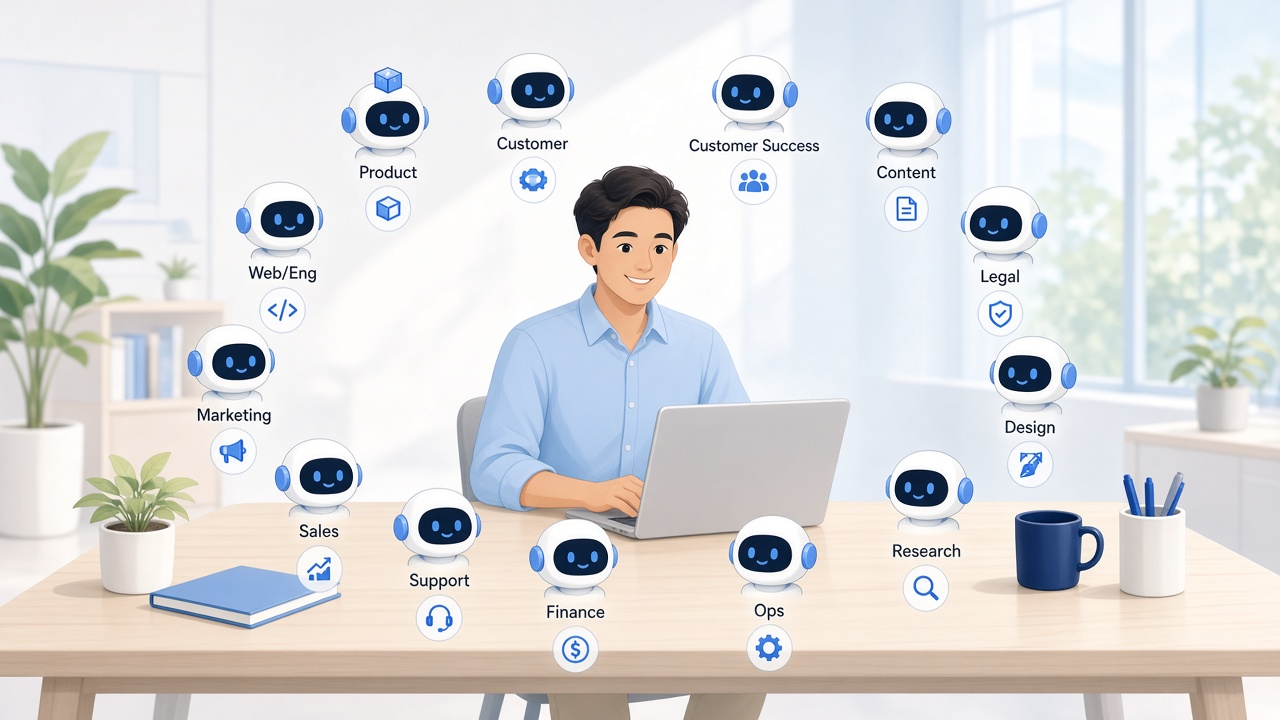
A Self-Driving Business (SDB) is an online business built around them, with a full-time expert and specialist AI agents handling the tedious work: product, website, marketing, sales, support, finance, and the everyday hassles.
They aim. The team runs the laborious loop. In today's world, that is how more people can boost income without inventing a company from a blank page alone.
Their strengths stay in the driver's seat of attention. They lean into what they love and are great at.
A full-time expert plus specialist AI agents take the tedious work: product, site, marketing, sales, support, and finance. You give them a chance. They aim the business.
A sponsored seat is the same path as Find Your Business: human expert plus specialist AI agents so the business can run while they play to their strengths.
Anyone can benefit from AI and a real team if they get a chance. Sponsoring an SDB is a hand up: they serve customers, build skill, and keep more of what they earn over time, instead of a one-time prize with nothing underneath.
Sponsor someone you know
A child, a veteran friend, a neighbor, a parent on thin Social Security: someone whose name you already say out loud.
Sponsor a stranger through a trusted nonprofit
A partner organization nominates people in the groups they already serve. You fund the seat. They bring the person.
You are not buying a chance. You oversee a system that can grow in value, lets them serve customers, and helps them contribute in a meaningful way.
Learn how sponsoring works on a call.
Who you can sponsor
Veterans
About 5.8 million U.S. veterans have a service-connected disability. About 5 in 10 of them are not employed.
Open the veterans pageBlind / low vision
About 5 in 10 working-age people with vision difficulty are not employed.
Open the blind / low vision pageDeaf / hard of hearing
About 4 in 10 working-age people with hearing difficulty are not employed.
Open the deaf / hard of hearing pageDisability
About 5 in 10 working-age people with a disability are not employed.
Open the disability pageSingle moms
About 3 in 10 families headed by a single mother live in poverty.
Open the single moms pageHomeless
On one night in January 2024, 771,480 people in the U.S. were experiencing homelessness.
Open the homeless pageFormerly incarcerated
1 in 3 people released from federal prison in 2010 had no recorded formal employment in the next 4 years.
Open the formerly incarcerated pageImmigrants / LEP
About 20.5 million working-age adults in the U.S. speak English less than "very well."
Open the immigrants / lep pageIncarcerated
About 1.25 million people were in U.S. prisons at year-end 2023. Many will need a lawful income path when they come home.
Open the incarcerated pageLong-term underemployed
About 1.9 million people were unemployed 27 weeks or longer in August 2025. About 4.5 million more were working part time for economic reasons: they want full-time hours.
Open the long-term underemployed pageRetired
16.4 million adult Social Security recipients (27%) had Social Security as their only personal income in 2022.
Open the retired pageFoster youth aging out
15,379 young people exited foster care by emancipation in FFY 2024. About 4 to 5 in 10 surveyed at age 21 were not employed full- or part-time.
Open the foster youth aging out pageRefugees / asylees
Among recent refugees in ORR's survey, 73% were in the labor force. In FY 2022, 36,615 people were granted asylum. Many still need an owned path to income while English and networks catch up.
Open the refugees / asylees pageFamily caregivers
About 48 million U.S. adults provide unpaid care to an adult. 61% of family caregivers also work: about 29 million people balancing both.
Open the family caregivers pagePeople in recovery
About 20.9 million U.S. adults who ever had a substance-use problem considered themselves in recovery or recovered (2021).
Open the people in recovery page
Learn how sponsoring works on a call.